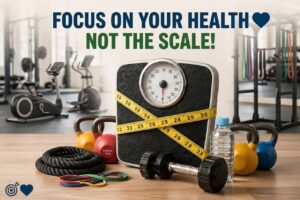
A lot of people are interested in keeping a healthy weight and living well. In my 30 years of training experience, I’ve noticed that when many people join gyms, one of the things they continuously do is step on the scale. But that number on the scale doesn’t show the full picture of your health. Let’s talk about smart ways to manage your weight for the long run and focus on being healthy, not just losing pounds.
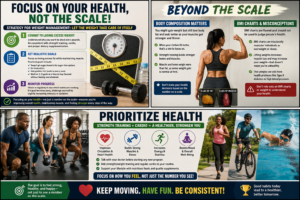
Strategy for Weight Management: Let the Weight Take Care of Itself
Commit to Losing Excess Weight
- Begin by understanding why you want to shed extra pounds, however the key is to be consistent with strength training and cardio, as well as proper dietary supplementation.
Set Realistic Goals
- Instead of focusing on just losing weight, aim to shed excess fat while maintaining muscle.
- Practical goals include:
- Swapping high-sugar desserts for sugar-free options in moderation.
- Adding protein-rich foods to every meal to stay fuller longer.
- Work on 2–3 goals at a time to stay focused without feeling overwhelmed.
Monitor Progress
- Check in regularly to see which habits are working. If a goal becomes easy, challenge yourself by slightly increasing intensity or duration.
Focusing on your health rather than just a number on the scale ensures that you’re improving overall health, maintaining muscle, and feeling stronger every step of the way.
Nutrition Tips
- It may be a good idea to eat more protein such as red meat, fish, some legumes, eggs, and butter more often. Choose complex carbohydrates, such as sweet potatoes, instead of sugary or processed foods. Pay attention to how much you eat so you don’t take in more calories than your body needs.
Beyond the Scale
-
Body Composition Matters
-
You might gain weight but still lose body fat and look better because your muscles are getting stronger and firmer. When your clothes start fitting better, that’s a good sign to focus on, rather than just the number on the scale. Doing strength training helps build stronger bones and muscles. Since muscle and bone tend to weigh more than fat, it’s normal to see some weight gain at first. Therefore, don’t make your health decisions based on the number on a scale.
BMI Charts and Misconceptions
-
BMI charts are flawed and should not be used to judge people’s health. Did you know that BMI charts can misclassify muscular individuals as overweight or obese, as it does not account for muscle mass versus fat mass? Lifting weights can make your muscles bigger, which might increase your weight, but that doesn’t mean you’re unhealthy. Thin people can still have health problems like Type II diabetes or high blood pressure. Therefore, don’t rely only on BMI charts or weight to understand your health.
-

Prioritize Health
Strength training and regular cardio are essential for maintaining good overall health because they help improve circulation and strengthen your heart, along with providing many other benefits. Before starting, it’s a good idea to talk with your doctor, and then you can begin adding strength or weight training exercises and consider dietary supplements as part of your healthy lifestyle.
The number on the scale doesn’t tell the whole story about your health. Instead of worrying about your weight, try to focus on exercises that make your body stronger and your heart healthier. This means doing things like lifting weights (strength training) and activities that get your heart pumping, like brisk walking, running, biking, or swimming.
When you make these exercises a regular part of your life you may enjoy them and start to feel better, have more energy, and improve your overall health. Over time, these good habits will bring positive changes, and the scale won’t be the main thing you pay attention to.
Remember, the goal is to feel strong, healthy, and happy, not just to see a number on the scale. Keep moving, have fun, and be consistent!
Follow on Facebook and Instagram.