



Here’s something that doesn’t get talked about enough in the fitness world: if you want to know whether a supplement actually does what it claims, you have to use it on its own.
Sounds simple, right? Yet this basic principle is ignored constantly, by everyday gym-goers, by so-called fitness influencers, and even by people who are actively on steroids while posting “honest reviews” of fat loss compounds or peptides. If you’re using multiple compounds at the same time and you tell your audience that one specific product changed your body, you don’t actually know that. And neither do they.
The Problem With Stacking and Reviewing Simultaneously
When you introduce two or more compounds into your body at the same time, you lose the ability to isolate cause and effect. Say you’re using Compound A, Compound B, and Compound C together, and you drop 10 pounds of fat over 12 weeks. Which one did the work? Was it A? B? C? All three working together? Would you have gotten the same result with just one of them?
You simply can’t answer that question, at least not accurately. Yet this is exactly the scenario playing out every day across social media, YouTube, and fitness forums, where someone stacks multiple compounds and then attributes their results to whichever product they happen to be promoting or reviewing.
A Real-World Example
I’ve personally used the SARM Andarine, which claims to assist with fat loss. I can tell you with confidence that it does what it claims and the reason I can say that with confidence is because I used it alone, without stacking it alongside other compounds. The results I saw were attributable to Andarine, and Andarine alone. Had I been using it alongside other fat-burning or body-recomposition compounds, I would have had no way of knowing what was actually producing the lipolytic (fat-burning) effects. That distinction matters. It’s the difference between actual knowledge and a guess dressed up as a testimonial.

The Influencer “Review” Problem
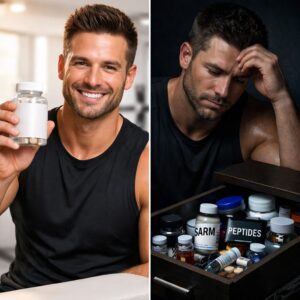
This issue gets worse when influencers and self-proclaimed fitness gurus enter the picture. Many of these individuals are using a cocktail of compounds and then presenting a polished physique transformation as evidence that some novel peptide, SARM, or supplement “works.” What they’re really showing you is that something in their stack worked, or that everything together worked. The product they’re reviewing may have contributed very little or nothing at all.
This isn’t always intentional deception. Some genuinely believe the product made the difference. But belief isn’t evidence, and a physique built on a multi-compound cycle is not a review of a single product. As I discussed in my article Deceptive Supplement Marketing: Unmasking the Myths, the supplement industry has a long history of leaning on hype, misleading claims, and carefully constructed images to sell products. The influencer review culture is an extension of that same problem, just delivered with a more personal face and a follower count.

What You Should Actually Do
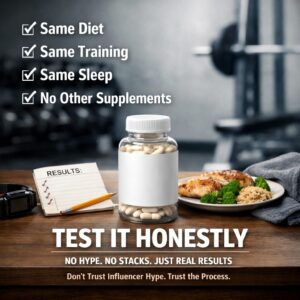
If you want a real answer about whether a supplement works, the methodology is straightforward: Use it as a standalone product. Keep everything else, such as your diet, training, sleep, and other supplementation as consistent as possible. Then assess the results honestly and accurately. It’s not glamorous advice. It doesn’t make for exciting content. But it’s the only approach that gives you information you can actually trust. The next time an influencer raves about a product while conveniently being mid-cycle on something else, remember: they’re not reviewing a supplement. They’re reviewing their entire regimen, and pinning the credit on whatever suits the post.