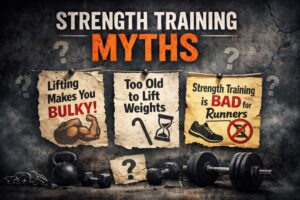
There’s plenty of talk online about strength training, but not all of it is true. With fitness apps and influencers blowing up, a lot of wrong ideas get passed around. The sad part is, these myths make people shy away from strength training, even though it’s one of the best things you can do for your body and mind.
Strength training not only supports heart health and bone protection but also boosts mental health. However, due to misconceptions, this beneficial form of exercise is sometimes overlooked. Here are some common strength training myths that need to be debunked.
Myth #1: Strength training makes you bulky
This is one of the biggest myths about strength training. A lot of people worry that lifting weights will automatically make them huge and bulky, but that’s not how it works.
The idea probably came from the bodybuilding scene in the 70s and 80s, when guys like Arnold Schwarzenegger were everywhere and gyms were packed with people training for hours to look like pro bodybuilders. But getting that kind of size takes years of hard work, strict diets, and often steroids. For the average person, strength training just helps build lean muscle, burn fat, and keep your body strong and healthy.
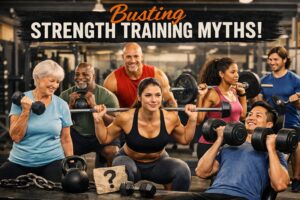
To really pack on noticeable size, you’d have to eat more calories than your body burns every day, with plenty of protein, and spend long hours targeting specific muscles. Just lifting weights alone won’t suddenly make you huge.
For most people who eat a normal diet, strength training helps build lean muscle while cutting down on body fat. That means your body shape improves in a healthy way, you get stronger, feel better mentally, and lower your risk of health problems like heart disease or diabetes.
Myth #2: Strength training isn’t for older individuals
A lot of people think lifting weights is only for the young or super fit, but that’s just not true. Strength training is actually one of the best things older adults can do, it keeps bones strong and helps prevent problems as we age.
Being able to move around on your own, get up from a chair without help, avoid falls, stay balanced, and keep flexible are all key to living well into your 80s and 90s. That’s why, especially after 50, strength training isn’t optional, it’s something you should definitely be doing.
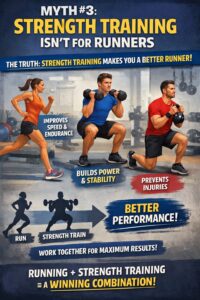
Myth #3: Strength training isn’t for runners
Some runners think lifting weights will slow them down or hurt their performance, but that’s not true. Strength training actually makes you a stronger, more efficient runner and helps protect you from injuries.
A lot of long-time runners believe the only way to get better is to just run more. Running practice is important, but adding strength work gives your body extra support. It’s not about choosing one or the other, running and strength training work best together to boost overall performance.