• Skip to primary navigation
  • Skip to main content
  • Skip to primary sidebar

Reuel Payne - Weight Training

Making Good Health Your Priority

  • HOME
  • About

Branched-Chain Amino Acids (BCAAs): Maximizing Recovery and Muscle Health

April 25, 2017 by Reuel Payne

[Updated May 2024]

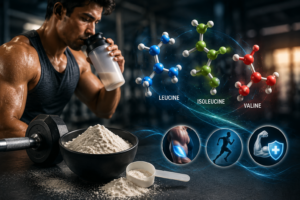
BCAAs are essential amino acids—valine, leucine, and isoleucine—that play crucial roles in protein anabolism and metabolism.

Introduction

With the rapid advancement of nutritional science and our understanding of how the human body functions, optimizing recovery after exercise has become a key focus for fitness enthusiasts and athletes alike. Among the various dietary components, Branched-Chain Amino Acids (BCAAs) have gained significant attention due to their potential benefits in muscle recovery and overall health.

The Importance of BCAAs

BCAAs are essential amino acids that cannot be synthesized by the body and must be obtained through diet or supplementation. They are unique because they are primarily metabolized in skeletal muscle rather than the liver. Let’s explore their roles and benefits:

  1. Protein Anabolism: BCAAs serve as substrates for protein synthesis, making them essential for muscle repair and growth. Leucine, in particular, activates the mammalian target of rapamycin (mTOR) signaling pathway, which plays a central role in muscle protein synthesis.
  2. Enhanced Recovery: Consuming BCAAs before or after exercise can accelerate recovery by reducing muscle soreness and promoting tissue repair. BCAAs are rapidly assimilated into the bloodstream, providing readily available building blocks for muscle regeneration.
  3. Ammonia Detoxification: BCAAs play a critical role in ammonia detoxification. During intense exercise, BCAAs are used to convert ammonia into glutamine, which is then excreted. This process helps maintain optimal BCAA levels and prevents muscle breakdown.

Optimal Timing and Dosage

For maximum benefit, consider the following recommendations:

  • Timing: Take BCAAs approximately 30 minutes before your weight training session on an empty stomach. This allows for efficient absorption and utilization by muscle cells.
  • Dosage: Start with the recommended dose and gradually increase it over time. BCAAs are safe, as any excess is excreted by the body. Doubling the dose after the first week may elicit a positive therapeutic effect.

Real-Life Experience and Expert Insights

  • Leroy Colbert’s Wisdom: The late bodybuilding legend Leroy Colbert advocated for higher-than-recommended dosages of supplements, including BCAAs. His practical experience underscores the importance of individualized approaches to supplementation.
  • Science and Practicality: While scientific studies provide valuable insights, personal experience matters. Understanding the science behind BCAAs is essential, but physically experiencing their effects during training reinforces their value.
Takeaway

BCAAs are not just for professional athletes; they benefit anyone committed to fitness and well-being. Whether you’re recovering from intense workouts, aiming for lean muscle gains, or seeking overall health improvements, BCAAs can play a vital role. Always consult with a healthcare professional before starting any new supplement regimen, especially if you have pre-existing medical conditions.

Remember, great minds think alike—both research and practical experience contribute to optimal health and performance.


Follow on Facebook and Instagram.


Filed Under: Amino Acids, Dietary Supplementation Tagged With: Amino Acids, BCAA, Branch Chain Amino Acids

Primary Sidebar

Recent Posts

  • The Science of Sarcopenia: Why We Lose Muscle as We Age and How Strength Training Fights Back
  • Creatine: The Powerhouse Supplement
  • Fitness Over 40: Stay Strong and Healthy
  • Creatine for Women: More Than Just a Gym Supplement
  • From Deficiency to Well-Being: Amino Acids and Vitamins in Prescription Drugs

Recent Comments

  • Slow Down Aging With Strength Training - Reuel Payne - Weight Training on The Science of Sarcopenia: Why We Lose Muscle as We Age and How Strength Training Fights Back
  • The Science of Sarcopenia: Why We Lose Muscle as We Age and How Strength Training Fights Back - Reuel Payne - Weight Training on Exploring the Benefits of Dietary Supplements
  • The Science of Sarcopenia: Why We Lose Muscle as We Age and How Strength Training Fights Back - Reuel Payne - Weight Training on The Benefits of Exercising in a Gym
  • The Science of Sarcopenia: Why We Lose Muscle as We Age and How Strength Training Fights Back - Reuel Payne - Weight Training on Slow Down Aging With Strength Training
  • The Science of Sarcopenia: Why We Lose Muscle as We Age and How Strength Training Fights Back - Reuel Payne - Weight Training on The Importance Of Maintaining Muscle Mass As We Age

Archives

  • February 2026
  • September 2025
  • June 2025
  • May 2025
  • February 2025
  • November 2024
  • August 2024
  • June 2024
  • May 2024
  • April 2024
  • September 2023
  • August 2023
  • July 2023
  • April 2023
  • January 2023
  • December 2022
  • October 2022
  • August 2022
  • July 2022
  • September 2020
  • August 2020
  • June 2020
  • May 2020
  • April 2020
  • February 2020
  • January 2020
  • August 2019
  • July 2019
  • March 2019
  • October 2018
  • December 2017
  • June 2017
  • May 2017
  • April 2017

Categories

  • Amino Acids
  • Cardio
  • Cardiovascular Exercise
  • Dietary Supplementation
  • Drugs
  • Exercise
  • Gym Etiquette
  • Health
  • Healthy Lifestyle
  • Strength Training
  • Weight Training

Recent Posts

  • The Science of Sarcopenia: Why We Lose Muscle as We Age and How Strength Training Fights Back
  • Creatine: The Powerhouse Supplement
  • Fitness Over 40: Stay Strong and Healthy
  • Creatine for Women: More Than Just a Gym Supplement
  • From Deficiency to Well-Being: Amino Acids and Vitamins in Prescription Drugs

Recent Comments

  • Slow Down Aging With Strength Training - Reuel Payne - Weight Training on The Science of Sarcopenia: Why We Lose Muscle as We Age and How Strength Training Fights Back
  • The Science of Sarcopenia: Why We Lose Muscle as We Age and How Strength Training Fights Back - Reuel Payne - Weight Training on Exploring the Benefits of Dietary Supplements
  • The Science of Sarcopenia: Why We Lose Muscle as We Age and How Strength Training Fights Back - Reuel Payne - Weight Training on The Benefits of Exercising in a Gym
  • The Science of Sarcopenia: Why We Lose Muscle as We Age and How Strength Training Fights Back - Reuel Payne - Weight Training on Slow Down Aging With Strength Training
  • The Science of Sarcopenia: Why We Lose Muscle as We Age and How Strength Training Fights Back - Reuel Payne - Weight Training on The Importance Of Maintaining Muscle Mass As We Age

Archives

  • February 2026
  • September 2025
  • June 2025
  • May 2025
  • February 2025
  • November 2024
  • August 2024
  • June 2024
  • May 2024
  • April 2024
  • September 2023
  • August 2023
  • July 2023
  • April 2023
  • January 2023
  • December 2022
  • October 2022
  • August 2022
  • July 2022
  • September 2020
  • August 2020
  • June 2020
  • May 2020
  • April 2020
  • February 2020
  • January 2020
  • August 2019
  • July 2019
  • March 2019
  • October 2018
  • December 2017
  • June 2017
  • May 2017
  • April 2017

Categories

  • Amino Acids
  • Cardio
  • Cardiovascular Exercise
  • Dietary Supplementation
  • Drugs
  • Exercise
  • Gym Etiquette
  • Health
  • Healthy Lifestyle
  • Strength Training
  • Weight Training
Always consult with a qualified healthcare professional prior to beginning any diet or exercise program or taking any dietary supplement. The content on my website is for informational and educational purposes only and is not intended as medical advice or to replace a relationship with a qualified healthcare professional. copyright © 2026 reuelpayne.com