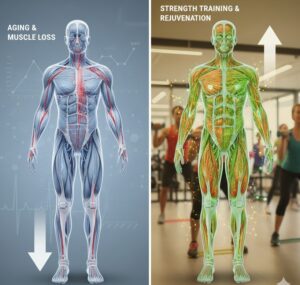
As we get older, many of us notice that everyday tasks such as carrying groceries, climbing stairs, or even standing up from a chair start to feel harder. This isn’t just “getting old.” It’s often the result of sarcopenia, the natural decline in muscle mass and strength that comes with age.
What Is Sarcopenia?
Sarcopenia is the gradual loss of muscle tissue and function. It usually begins in your 30s or 40s and speeds up after age 60. By the time people reach their 80s, as many as half may experience significant muscle loss. Weak muscles don’t just affect strength, they also slow metabolism, reduce balance, and increase the risk of falls and frailty.

Why Does Muscle Decline?
The main culprits are hormonal changes and reduced activity levels. Two key hormones play a big role:
Growth Hormone (GH): This hormone helps repair and build muscle tissue. As we age, GH levels drop, meaning our muscles don’t recover or grow as easily.
Testosterone: Known as the “strength hormone,” testosterone supports muscle protein synthesis. Men experience a steady decline in testosterone with age, and women also see hormonal changes that affect muscle tone.
When these hormones decrease, the body becomes less efficient at maintaining muscle, even if diet and activity remain the same.

How Strength Training Helps
Here’s the good news: strength training directly combats sarcopenia. Lifting weights, or even bodyweight training (like push-ups and squats) stimulate the body to produce more GH and testosterone. This hormonal boost helps:
Preserve existing muscle tissue
Build new muscle fibers
Improve bone density
Enhance balance and coordination
In short, strength training acts like a natural “signal” to your body, telling it to keep muscles strong and active despite aging.
Practical Takeaways
Start small: Even 2–3 sessions per week of resistance training in a gym can make a difference.
Focus on compound movements: Exercises like squats, trap bar deadlifts, and push-ups work multiple muscle groups at once.
Don’t forget recovery: Sleep and proper nutrition are essential for hormone balance and muscle repair.
Consistency beats intensity: Regular, moderate training is more effective than occasional extreme workouts.

Bottom Line
Sarcopenia is a natural part of aging, but it doesn’t have to define your later years. By understanding the hormonal shifts behind muscle loss and using strength training to counteract them, you can stay strong, mobile, and independent well into old age.