
Is strength training for excess fat loss possible? Achieving significant fat loss through strength training is not only possible but also backed by practice and modern research. Strength training, also known as resistance training, is a time-tested method for building muscular strength. It’s proven to not only enhance strength but also improve muscle size and counteract age-related muscle loss.
In recent times, strength training has gained popularity among those aiming to lose weight. While cardio exercises like running and cycling are effective in reducing body fat, they may also lead to a decrease in muscle size, resulting in weaker muscles and greater perceived weight loss. This is because muscle is denser than fat. However, unlike endurance exercises, resistance training has been shown to reduce body fat while simultaneously increasing muscle size and strength. Incorporate both for better results.
The ‘After-Burn Effect’
When we exercise, our muscles need a lot more energy than when we’re just sitting around. That energy comes from breaking down fat and carbs stored in our body, mainly in our muscles, liver, and fat tissue, with the help of oxygen. That’s why we breathe faster and our heart beats harder during a workout: it’s working to send more oxygen and fuel to the muscles that are doing the work.
Even after we stop exercising, our body keeps using extra oxygen for a while to help our muscles recover. During this time, it continues breaking down stored fat and carbs to restore the muscles to their normal state. This phenomenon, known as excess post-exercise oxygen consumption (EPOC) or the “after-burn effect,” describes the duration of elevated oxygen uptake after exercise to aid muscle recovery.

How long the “after-burn effect” lasts depends on the kind of workout you do, how hard you push yourself, how long you exercise, plus your fitness level and diet. Workouts that use big muscle groups and push you close to your limit give you a stronger and longer after-burn.
Long-Term Fat Loss
Resistance training is also effective for long-term weight control. The size of your muscles has a big impact on how many calories your body burns when you’re just resting. This is called your resting metabolic rate (RMR). For most people, RMR makes up about 60–75% of the calories they burn each day without exercise. At rest, the body mainly uses fat as its fuel source.
Building bigger muscles through strength training makes your body burn more calories even when you’re resting, which helps with fat loss over time. In fact, a review of 18 studies showed that resistance training was better at boosting this resting calorie burn than cardio or mixing cardio with weights. Still, it’s important to watch your sugar and calorie intake, without that, losing fat and keeping it off becomes much harder.
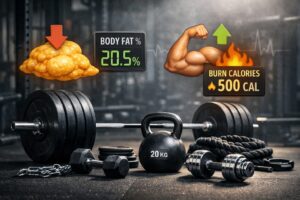
Strength training works best when you use your biggest muscles, do full‑body moves while standing, and use exercises that bend more than one joint at a time. These kinds of workouts make your body work harder, which helps you build more muscle and burn more calories even when resting. A good strength training program should mix three things: how hard you push yourself (intensity), how many exercises and sets you do (volume), and how you keep challenging yourself as you get stronger (progression). The key is to make each workout tough enough that your muscles really feel it.
The best way to do strength training for fat loss is to use what’s called the “repetition maximum” method. That means picking a weight heavy enough that you can only do about six to ten reps before your muscles give out and you can’t do another one with good form. For each exercise, aim for three to four sets, and train each muscle group two or three times a week.

As you get stronger, you’ll need to lift heavier weights or push yourself harder to keep your muscles tired by the last rep. That’s how progress works, you keep raising the challenge, so your body keeps adapting. For example, instead of getting tired at the tenth rep, you might increase the weight so fatigue hits at the eighth or even sixth rep.
In short, strength training helps burn extra fat in two big ways: it boosts the “after-burn effect” so your body keeps burning calories after the workout, and it builds muscle, which makes you burn more calories even while resting. When you pair this with a healthy diet and supplementation, it becomes an even more powerful tool for losing fat and staying healthy long-term.