
For the past twenty‑five plus years, I’ve managed to stay injury‑free while lifting weights. The main reason is simple, I’ve always taken care to be cautious during my workouts. A big issue you see in many gyms is ego lifting, where people try to hoist more weight than they can really handle just to show off. That kind of approach often ends with someone getting hurt.
Ego Lifting: A Gender-Neutral Issue
Even though ego lifting is often seen as something men do, women can also fall into the trap of trying to lift heavier weights to impress others. No matter if you’re a man or a woman, this behavior can make your workouts less safe and increase the risk of getting hurt.
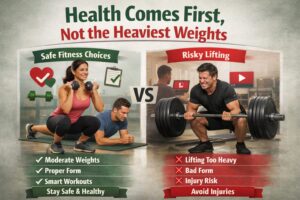
Health Comes First, Not the Heaviest Weights
When it comes to staying healthy, unless you’re doing sports that require a lot of strength, like powerlifting or Olympic weightlifting, it’s not a good idea to try lifting the heaviest weight you can or copying risky exercises from YouTube. Doing these things can hurt you, so it’s better to focus on exercises that are safe and good for you in the long run.
Strategies for Maintaining an Injury-Free Regimen
| Fitness Tips | What It Means |
|---|---|
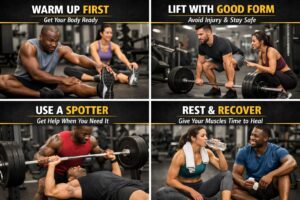
| Start each workout with a 10-minute warm-up on an elliptical or treadmill to get your body ready. | |
| Don’t lift weights that are too heavy just to impress others. It’s safer to lift what you can handle. | |
| Move smoothly and carefully when doing exercises to keep good form and avoid injury. | |
| Don’t drop weights, especially during deadlifts, to protect yourself and the equipment. | |
| Gradually increase the weights you lift over time to build strength safely. | |
| Make sure to have rest days each week to give your body time to heal and get stronger. | |
| Pick weights that challenge you but don’t make you lose good form. | |
| Learn about fitness from reliable sources, not just what people say at the gym. | |
| Support your workouts with a good diet and the right supplements. |
Form Over Force
When lifting heavy weights, it’s important to do it correctly. If a weight is too heavy and you can’t lift it properly, it’s safer not to lift it at all. In the gym, you might see people using spotters to help keep them safe. However, a spotter should only step in if you lose control of the weight, not to help you lift it. If a spotter has to help lift the weight, it means it’s too heavy for you to handle safely. This way, you can avoid getting hurt and stay safe while exercising.
Building Strength, Not Breaking Spirits
Living healthy isn’t about pushing your body to the limit, it’s about building it up the right way. Mix in weight training and the right supplements, but keep your eyes on the bigger picture: staying fit, feeling good, and avoiding injuries. When you put health and safety first, you can stick to a steady routine that keeps you moving forward and enjoying life for the long haul.